
Humanitarian Affairs · Source update 19 October 2026 · 2 min read
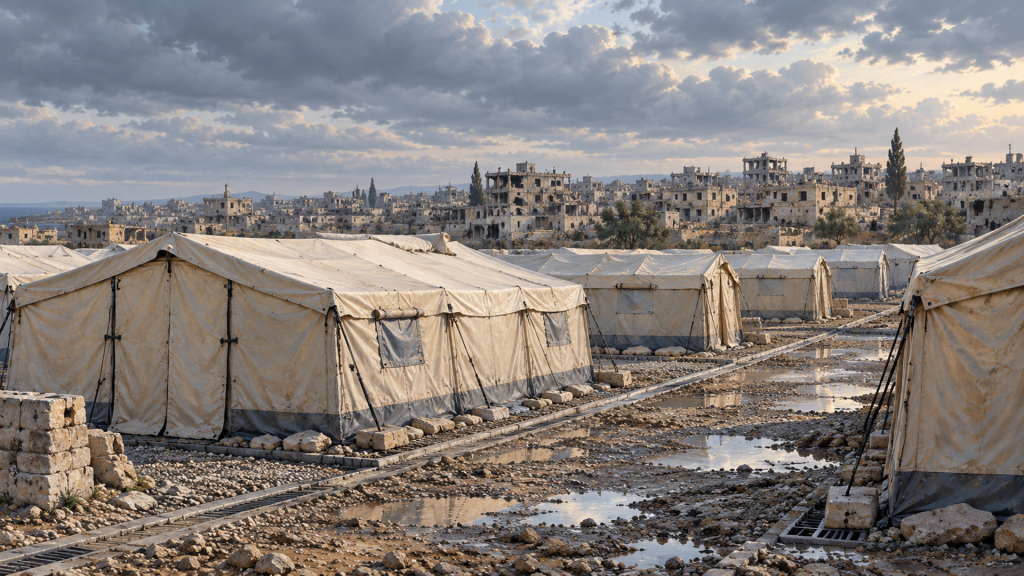
United Nations agencies have warned that displaced families in Gaza face serious shelter risks as the cold and rainy season approaches. In a situation report posted on 19 October, the UN Office for the Coordination of Humanitarian Affairs said approximately 950,000 displaced people were living in sites assessed as being at medium to high risk of flooding. More than 400,000 were in the high-risk category. [1]
The report, titled 15 October 2026, principally covers developments between 29 September and 12 October. Its figures describe conditions during that reporting period and should not be treated as a live count. [1]
A shortfall in winter assistance
OCHA reported that available supplies could provide partial assistance to only 18 per cent of the 294,250 families identified as requiring winter shelter support. It also highlighted constraints involving suitable land, equipment and materials. [1]
In a separate October warning, the International Organization for Migration said nearly two million people required shelter and non-food-item assistance. Its winter-specific estimate concerned a smaller group of almost 300,000 families. The two measures describe different categories of need and should not be added together. [2]
IOM identified insufficient funding and restrictions on the entry of essential shelter supplies as major barriers to a response at the scale required. It also reported widespread poor conditions in tents and improvised shelters. [2]
Shelter and essential services
The agencies’ assessments link safe accommodation with site management and access to basic services. IOM described its work with humanitarian partners on shelter coordination and technical support, while OCHA reported community efforts to improve drainage and reinforce shelters. [1][2]
The immediate priority described in these updates is protection against cold, rain and unsafe living conditions. That emergency requirement remains distinct from the longer process of rebuilding permanent housing and infrastructure. The reports provide a dated account of needs and operational constraints, rather than evidence that the winter assistance gap has been resolved.
Sources
[1] OCHA Humanitarian Situation Report titled 15 October 2026, posted 19 October 2026
[2] IOM winter shelter warning, October 2026; page dated 7 October, statement datelined 9 October