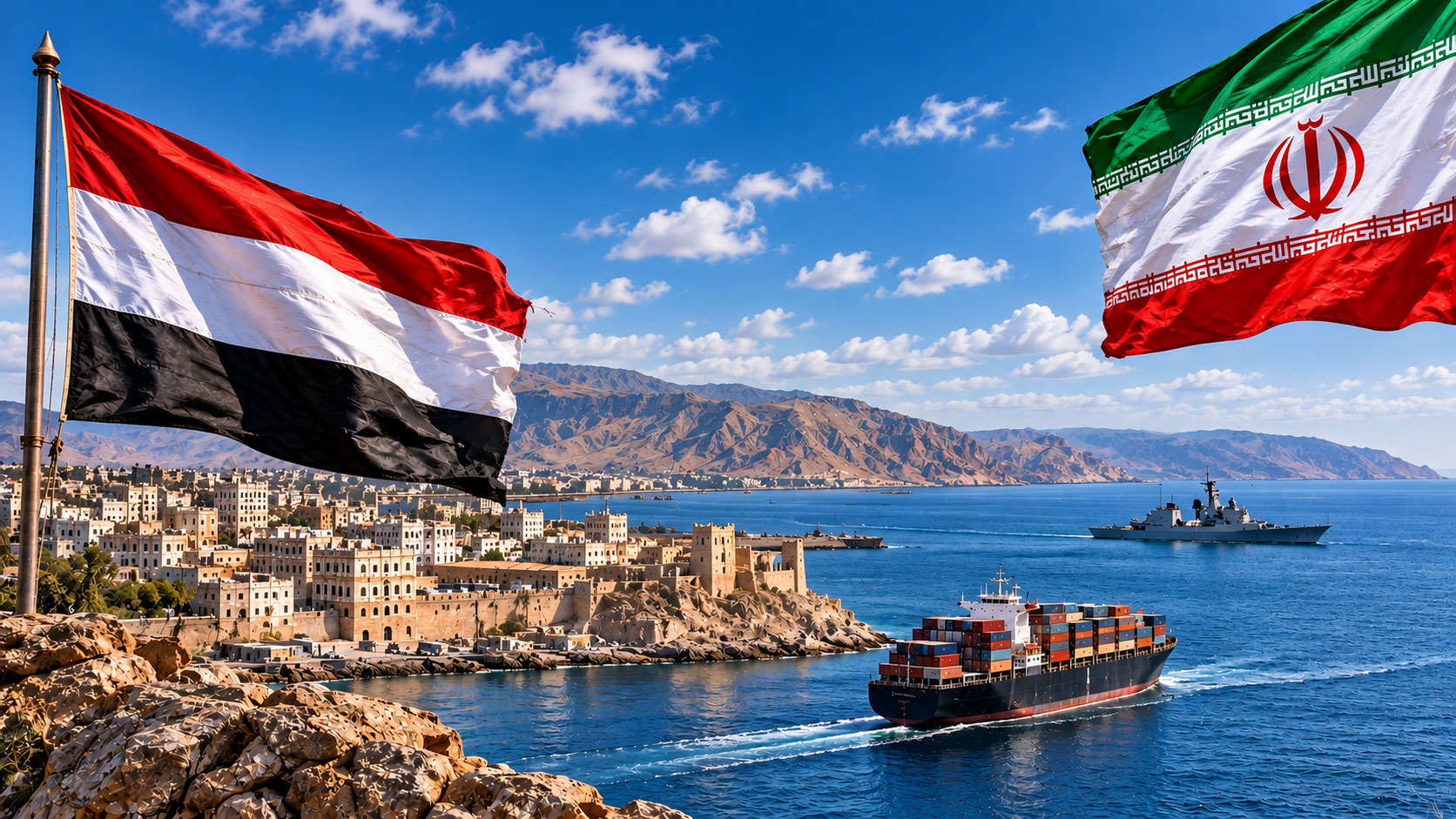
The conflict between the United States and Israel in one side and Iran in another, which erupted on 28 February 2026, has undoubtedly triggered seismic shifts in an already volatile Middle East, while also generating serious geopolitical and economic repercussions worldwide, to the extent that it has even overshadowed the war in Ukraine. The escalation of hostilities between Iran’s theocratic regime and the United States—which, according to numerous analysts, entered the war in pursuit of Israeli objectives—has resulted in extensive infrastructure damage across the region. Thousands of people have been killed, millions displaced, and the exchange of fire has threatened maritime traffic through the Strait of Hormuz, one of the world’s most critical chokepoints. Prior to the conflict, between 20 and 30 per cent of the world’s oil supply passed through this strategic waterway on a daily basis, contributing to instability in global energy markets and the wider economy.
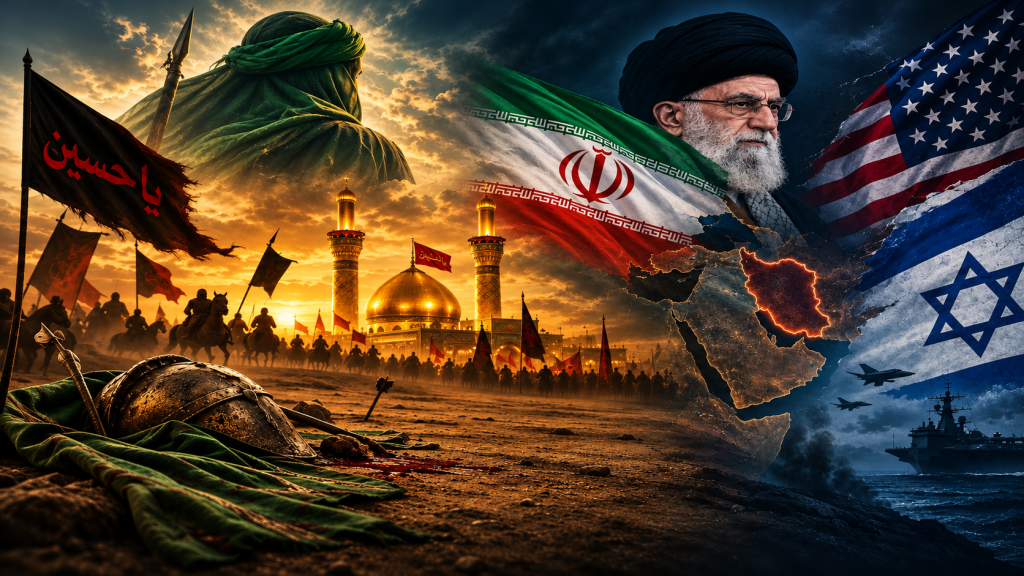
Public discourse increasingly suggests that, despite suffering substantial losses and the death of Supreme Leader Ayatollah Ali Khamenei, Iran has surprised the US–Israeli coalition with its fierce resistance. Some observers have even argued, figuratively speaking, that “the side seemingly destined to become the victim has proved highly capable of mounting resistance.” In addition to a tactically well-conceived military strategy and the effective use of geographical advantages, the key to Iran’s resilience lies in the ideological framing of the historical event known as the Battle of Karbala. This event holds profound significance for Muslims in general and occupies a particularly prominent place in the hearts and collective memory of Shiite believers.
At the centre of this historical event stands Imam Husayn, the grandson of the Prophet Muhammad and the son of his daughter Fatima and Imam Ali. Following Muhammad’s death and the rule of the four Rightly Guided Caliphs, Muawiya came to power, establishing the Umayyad Caliphate, whose capital was Damascus. Upon his death, he was succeeded by his son Yazid I, who openly initiated the persecution of the Ahl al-Bayt, the immediate family of the Prophet Muhammad.
One of Yazid’s first acts was to summon Husayn and demand that he submit to his authority and pledge allegiance to the ruling caliphate. Husayn refused and sought refuge in Mecca. He subsequently began receiving letters from Kufa, an Iraqi city regarded as one of the historical centres of Shiite Islam, written by his followers and supporters, who urged him to come to their city and lead them along the “just and righteous path.” Although many warned him that the journey to Kufa could prove dangerous, Husayn believed it was his duty to answer their call, despite his profound awareness that he might be walking towards almost certain death.
Meanwhile, Ubayd Allah ibn Ziyad, Yazid’s governor of Khurasan, Basra, and Kufa, dispatched a mercenary force to establish control over Kufa through brutal violence. Upon learning of Husayn’s whereabouts, Yazid sent cavalry to intercept him at Karbala, approximately 70–80 kilometres northwest of Kufa. This took place on 2 October 680. Imam Husayn, accompanied by 72 of his most loyal companions, including women, children, and members of his own family, was surrounded for eight days by an army of the Umayyad Caliphate numbering several thousand soldiers.
Despite their numerical inferiority, thirst, and exhaustion, Husayn and his companions remained unwavering in their faith. Sustained by their religious convictions, they mounted what appeared to be an almost superhuman resistance against a numerically superior and militarily stronger adversary. Ultimately, on 10 October 680, according to the traditionally accepted date, they were all killed and came to be venerated as martyrs. Husayn himself was struck by an arrow as he attempted to approach a water source to drink. His adversaries subsequently killed him and severed his head.
Shiites commemorate this event through the observance of Ashura, a day of profound religious significance during which they remember the martyrdom of Imam Husayn. Some believers even inflict physical injuries upon themselves as a means of identifying with Husayn and experiencing, symbolically, a portion of his suffering. The Battle of Karbala has thus become a foundational reference point for several central ideals in Shiite thought: martyrdom, the capacity to resist a numerically and militarily superior adversary, and a willingness to endure ultimate sacrifice.
These ideals inform the religious and cultural practices of Shiite communities in everyday life and may also find expression in the realm of international relations. Their relevance was particularly evident during the war between Iran and the United States. Some sources have even suggested that Ayatollah Ali Khamenei knowingly embraced martyrdom alongside members of his family, refusing to go into hiding in order to share Husayn’s fate and depart from this world as a martyr.
Consequently, in the eyes of many Iranians and a substantial segment of the wider Shiite world, US President Donald Trump is portrayed as a “reincarnation” of Caliph Yazid, while the formidable military forces of the United States, together with the Israeli armed forces, are depicted as a “new Umayyad Caliphate” whose objective is the destruction of Iran. Within this ideological framework, Ayatollah Ali Khamenei, his family, and his companions are cast as figures destined to make the ultimate sacrifice, in a manner analogous to Husayn and his followers at Karbala.
In the collective memory of Shiite Muslims, the Battle of Karbala represents far more than a historical event; it is a symbol of injustice, sacrifice, and resistance. Since the 1979 Islamic Revolution, Karbala has been embedded in Iran’s ideological framework as a powerful instrument that shapes political decision-making, facilitates popular mobilisation, and informs the country’s approach to external adversaries, particularly the United States and Israel. In this context, one of the best-known slogans among Shiite Muslims captures the enduring significance of this historical legacy: “Every day is Ashura, every place is Karbala.”