Why Stockholm’s Unresolved Consequences Still Threaten Security at Hormuz and Bab el-Mandeb?
Stockholm’s Unresolved Strategic Legacy
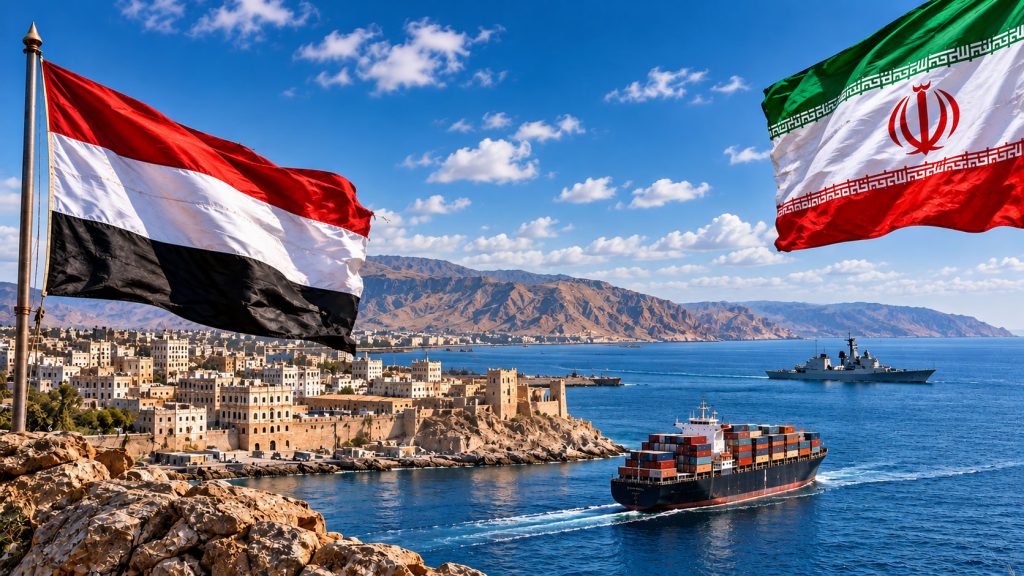
Nearly eight years after the Stockholm consultations interrupted the battle for Hodeidah, Yemen’s western coast remains central to a much wider regional security dilemma. What once appeared to be a local contest over a port has become inseparable from the security of Bab el-Mandeb, the Red Sea and, increasingly, the Strait of Hormuz.
On 29 October 2026, former US Secretary of State Mike Pompeo warned in remarks to Al Arabiya English that the Houthi challenge reaches well beyond Saudi Arabia and requires further military action. His comments recall earlier criticism by former British Ambassador Edmund Fitton-Brown of the decision to halt the 2018 offensive. Both assessments invite renewed scrutiny of a diplomatic decision whose consequences Yemeni critics raised at the time.
My own objection to Stockholm was never an objection to negotiation itself. It concerned sequencing: government-aligned forces were approaching Hodeidah, yet the offensive was stopped before they secured the port and the bargaining leverage that control might have provided. Diplomacy was pursued without an enforceable alternative capable of changing the underlying territorial balance.
The issue is not whether military success was guaranteed. It was not. The issue is whether a ceasefire that left decisive strategic positions unresolved could deliver the security and political settlement its sponsors sought.
Why the Western Coastline Matters
Yemen’s Tihamah coastal plain has repeatedly shaped contests for power in the country. Ottoman campaigns in the sixteenth and nineteenth centuries used the coastal approaches as routes towards the highlands. In 1934, Prince Faisal’s seizure of Hodeidah strengthened Saudi Arabia’s negotiating position in the war with Imam Yahya and contributed to the settlement embodied in the Treaty of Taif.
This history does not establish that control of Hodeidah alone determines Yemen’s fate. It does show why the western coast can alter both military calculations and diplomatic leverage.
At the close of the Stockholm consultations on 13 December 2018, UN Secretary-General António Guterres described Hodeidah as the “make it or break it” issue. At the same press conference, UN Special Envoy Martin Griffiths referred to it as “the center of gravity of the war in Yemen”. Their descriptions captured its importance, even as the UN and critics of the ceasefire drew different operational conclusions.
For the United Nations, averting a destructive urban battle and protecting humanitarian access were urgent priorities. Those were legitimate concerns. For critics of the timing, however, a cessation of hostilities without verified reciprocal withdrawals risked turning a temporary humanitarian arrangement into a durable strategic advantage for the Houthis.
Commanders on the government side believed they were close to success, some speaking of days or even hours. Such predictions could not be tested and the hazards of urban combat were substantial. Still, the central dilemma remains: what durable security arrangement replaced the leverage surrendered when the offensive stopped?
A Ceasefire Without a Resolved Balance
Stockholm emerged from a convergence of international pressure, not from UN diplomacy alone. On 30 October 2018, Pompeo and US Defence Secretary James Mattis urged a ceasefire and negotiations. Britain’s Foreign Secretary Jeremy Hunt took part in the concluding diplomacy, and the United Kingdom led efforts behind Security Council Resolution 2451 endorsing the agreement.
The agreement provided for reciprocal redeployments from Hodeidah and its ports. Although the ceasefire broadly endured, the substantive redeployments envisaged by the arrangement did not materialise. The confrontation was contained, but the geography of power remained largely intact.
Within the internationally recognised government, the agreement also produced frustration over external pressure and political accountability. A 2019 International Crisis Group investigation recorded resentment among Yemeni officials over the terms they had accepted. Foreign Minister Khaled Al-Yemani, who headed the government delegation, departed office in June 2019 amid criticism surrounding implementation. The wider responsibility, however, could not reasonably be placed on one minister alone.
In my subsequent articles and public interventions, particularly after December 2020, I argued that continued Houthi control of Hodeidah and adjacent coastal territory would eventually affect not only Yemen’s political settlement but also international shipping and the security of the Red Sea.
The lesson is not that humanitarian imperatives should be subordinated to military ambition. Rather, humanitarian arrangements need credible verification, enforceable obligations and a political-security design that does not leave the original coercive capacity untouched.
Two Chokepoints, Interlocking Pressures
The limitations of offshore force became evident again during the roughly fifty-day US air campaign against Houthi targets in 2025. The Oman-mediated understanding announced in May brought American offensive operations to an end, but it did not restore the Yemeni government’s authority along the western coastline.
At the time, I advocated consideration of coordinated action linking American and British maritime and air capabilities with legitimate Yemeni ground formations operating under unified national command. Such an operation would have carried serious humanitarian and military risks. Yet it also offered a possible route towards restoring territorial authority and strengthening the basis for a negotiated political settlement.
Air and naval power can disrupt weapons systems, intercept attacks and protect vessels. They cannot, by themselves, create functioning Yemeni institutions or permanently displace an armed organisation from the territory from which it operates.
The renewed Houthi offensive along parts of the western coastline in September 2026, and the subsequent government counteroperations in October, underscored how contested territory near Bab el-Mandeb translates directly into maritime insecurity.
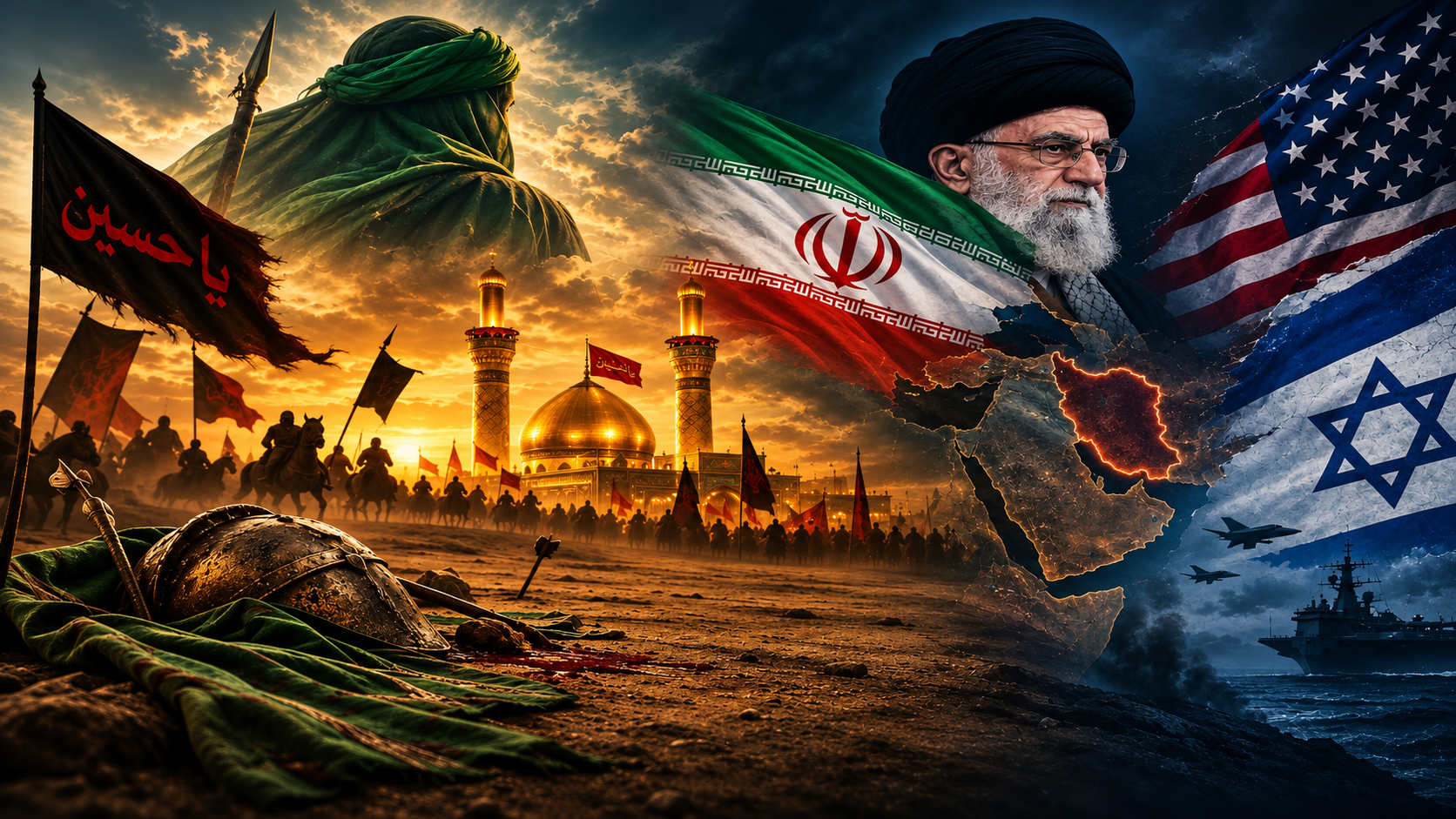
Hormuz and Bab el-Mandeb are distinct waterways, but their vulnerabilities interact. Pressure at Hormuz threatens Gulf energy exports; disruption at Bab el-Mandeb affects traffic linking the Indian Ocean, the Red Sea and the Suez Canal, including energy flows from Saudi Arabia’s Red Sea terminals towards Asia. A confrontation with Iran could heighten pressures at both passages at once.
An arrangement that addresses nuclear diplomacy or passage through Hormuz while leaving Houthi coercive capabilities at Bab el-Mandeb intact would risk exchanging temporary relief for recurring vulnerability. Security challenges also reach into the Gulf of Aden, where investigations have described arms-related and logistical links between the Houthis and Somalia’s Al-Shabaab. Those reported links do not, by themselves, make Al-Shabaab an Iranian proxy, but they underline the complexity of the maritime environment.
From Containment to Sovereign Deterrence
A more durable approach requires three mutually reinforcing circles of deterrence. The first is Yemeni: legitimate, effective authority on the western coastline, sustained by unified command, professional security forces and credible governance. Without this foundation, outside military pressure remains episodic.
The second is regional: Saudi, Gulf and Egyptian coordination in training, intelligence, maritime protection and long-term institutional support. Regional partners can strengthen Yemeni capabilities, but should not replace Yemeni ownership of the security mission.
The third is international: protection of freedom of navigation, backed by credible deterrence and diplomacy. International naval deployments remain essential, yet they cannot substitute indefinitely for a functioning sovereign authority ashore.
Alongside these measures, strategic redundancy in energy, transport and communications corridors can reduce the economic leverage created by dependence on a small number of vulnerable maritime passages. Resilience and territorial security should be pursued together, not treated as competing solutions.
The deeper lesson of Stockholm is therefore about the relationship between diplomacy and the balance of power. Negotiations are indispensable, but agreements must be judged by the arrangements they can actually enforce. A ceasefire that stops an offensive without changing the sources of coercion may defer the crisis rather than resolve it.
Yemen’s sovereignty cannot be treated as a disposable component of a wider regional bargain. Eight years after Stockholm, the most consequential question is whether any future settlement will combine humanitarian protection and diplomacy with enforceable commitments and a credible path to legitimate Yemeni authority over the coastline.
Lasting maritime security will not be secured by offshore containment alone. It depends on the political and territorial conditions that prevent the threat from continually re-emerging.